Understand the problem
We review the records and speak with the people who do the work. That helps establish the cause, the practical constraints and the decisions needed.
SLEIPNIR SYSTEMS / OPERATIONS · PROJECTS · TECHNOLOGY
Founded and led by two service-disabled veterans.
We provide fractional operations and technology leadership, project delivery, industrial data integration and managed IT support. We work with business owners and prime contractors to take responsibility for a defined role or workstream and carry the work through.
FRACTIONAL LEADERSHIP · PROJECT RECOVERY
INDUSTRIAL DATA · MANAGED IT
JACKSONVILLE / NORTHEAST FLORIDA
On-site work and remote delivery
Generation experience across successive operating, commissioning and startup roles
Power and LNG capital-project experience
Major-project and development scope in planned project value, including development-stage work
Bring us in for a defined assignment or an agreed part of the week. The role can cover operating leadership, technology decisions, a project that needs to be completed or a system that needs to work better.
An experienced operating leader works with your team on a part-time basis. We help manage performance, budgets, priorities and the people responsible for carrying out the work.
02A senior technology leader helps you plan investment, review vendors and make infrastructure decisions. We coordinate the work with your employees and providers.
03When a project has stalled or a facility is approaching startup, we organize the remaining issues, testing, operator training and handover into a plan the team can carry out.
04When reports disagree or a workflow depends on manual fixes, we trace the information from its source. We reconcile the data, improve reporting and automate repeatable steps.
05We help plan upgrades, review providers and define support for business devices, accounts, networks and applications. We coordinate the work with your team and specialist providers.
We work with industrial owners, business leaders, engineering firms, integrators and prime contractors.
We can take responsibility for a defined operations or technology workstream within your delivery program. The scope sets out the outputs, interfaces, reporting, decision authority and evidence needed for handover.
That can include operating readiness, project recovery, industrial reporting and integration, technology planning or delivery coordination. We work with your program team and the specialists responsible for the surrounding work.
Discuss a partner workstream →We first understand the operation and the result you need. Then we agree the work, the people involved, the time commitment and how the result will be checked.
We review the records and speak with the people who do the work. That helps establish the cause, the practical constraints and the decisions needed.
The proposal sets out the responsibilities, fees, schedule and completion tests. For a fractional role, it also defines the regular time commitment and decision authority.
We coordinate the agreed work, resolve open issues and test the result. Your team receives the records, documentation and remaining actions needed for a useful handover.
The aim is to leave the business with a completed piece of work and a team better equipped to run and maintain it.
Our principlesFor years, people Tim had worked with at other companies kept calling him when they faced a difficult operating problem. Tim and JC started Sleipnir to turn that help into a business: experienced people who understand the operation, can do the technical work and treat customers and partners fairly.
Our work brings together Tim’s generation, LNG and capital-project leadership with JC’s software, infrastructure, industrial reporting and application experience. The examples below show how that experience translates into practical operating and technology support.
Tim’s LNG leadership spanned liquefaction, terminals, construction, fuel logistics, customer implementation and corporate IT. He progressed to Vice President of Operations and New Projects.
He led expansions that doubled production capacity and, separately, terminal storage capacity, with an operating budget approaching $75M excluding corporate G&A. Across his career, power and LNG capital-project experience exceeds $850M, with approximately $2.3B in major-project and development scale.
An LNG operating-improvement program increased production 30% within 90 days and 50% within 180 days, reduced expenditures 30% and halved daily boil-off inventory losses.
LNG / EXECUTIVE ENGINEERING AND OPERATIONS / 2020–2026
Approximately $70M of engineering effort under executive engineering and operations oversight on a proposed $1.5B development, with a dedicated project director responsible for delivery.
Tim helped bring a 730 MW power station into startup while leading an existing 630 MW plant and 212 MW peaking fleet. He designed the new control room, hired 13 operators and led a 25-person team.
From late October 2019 through March 2020, he led whole-plant operations during staged commissioning. The work brought together controls testing, training, water systems, contractor coordination and operating procedures.
Preparing the operators, procedures and control room was part of bringing the new plant into service.
UTILITY GENERATION / OWNER-SIDE ROLE / AUG 2017–MAR 2020
Wisconsin DNR first-fire timeline / p. 8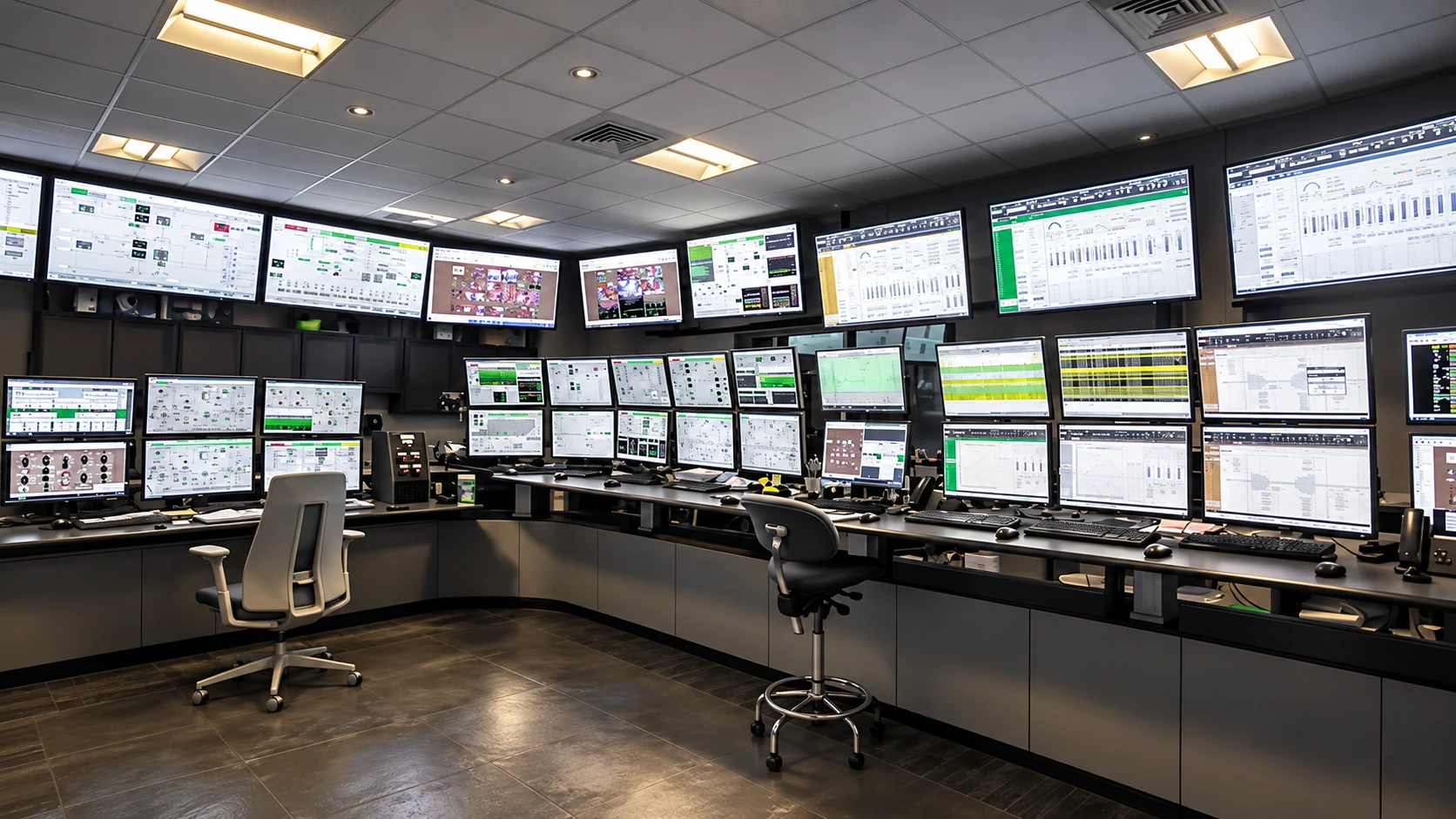
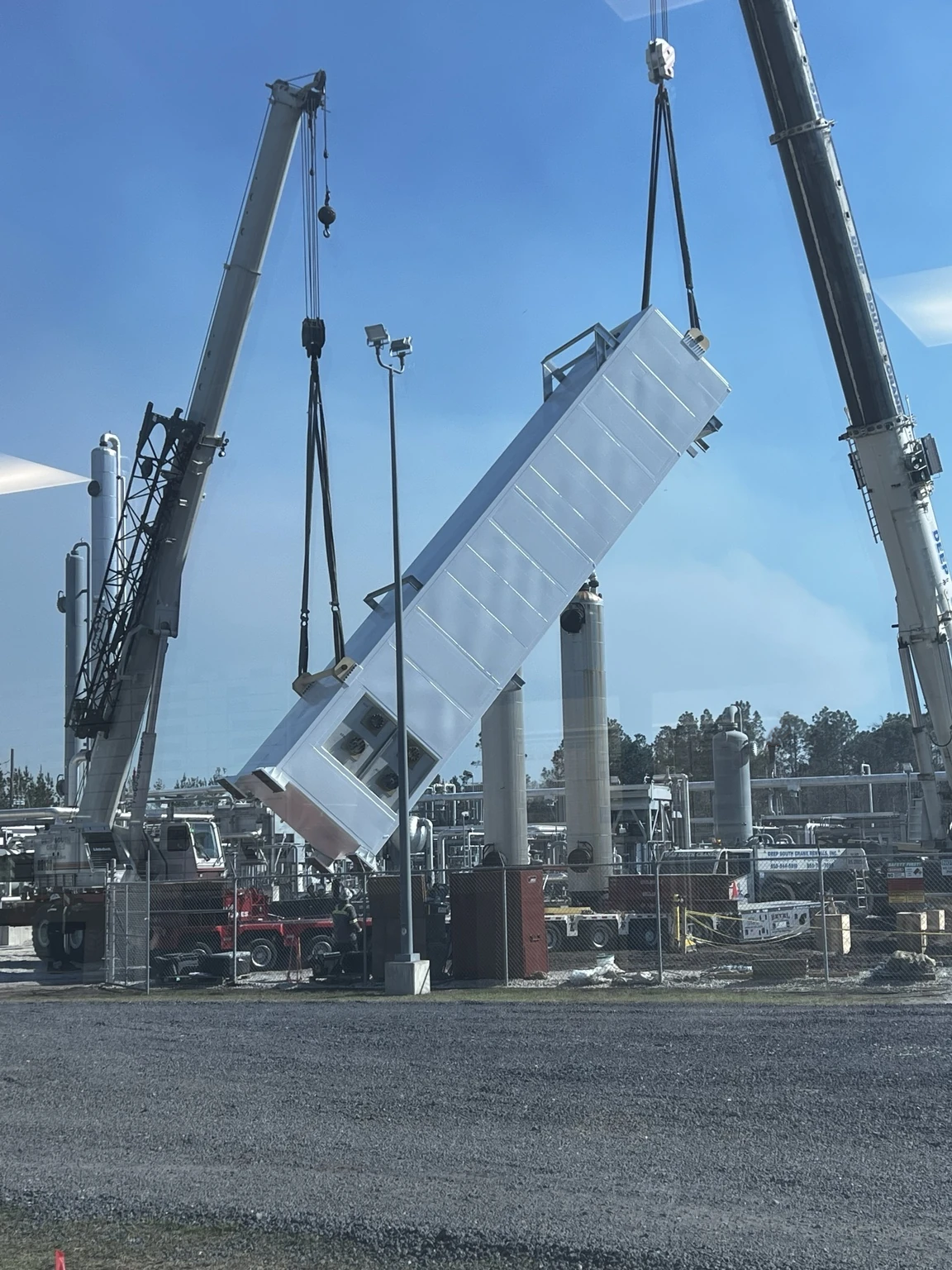
A constrained LNG terminal needed more storage. Tim developed a four-level, two-sided arrangement of 40 LNG ISO tanks, each with a nominal volume of 40 m³.
The 1,600 m³ installation joined structural engineering, pressure management, cryogenic and fire protection, and automated controls. With engineering and specialist support, the design secured acceptance from the authority having jurisdiction.
The design made additional storage possible within the site’s limits, with the engineering, safeguards and controls needed to operate it.
TALLEYRAND / DESIGN, INTEGRATION & OPERATING CONSTRAINTS
Read the detailed record and practical cases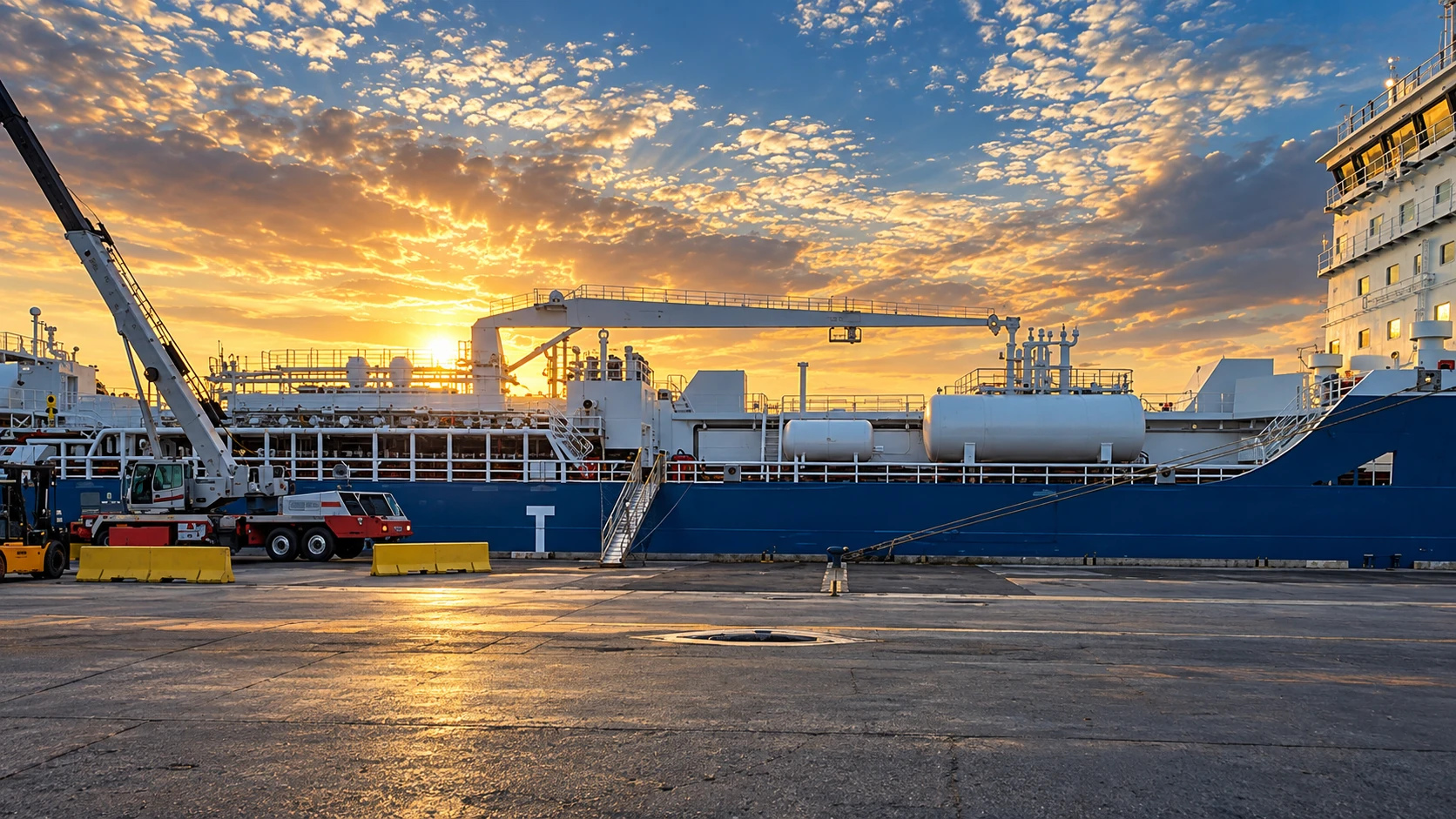
Operating experience
and hands-on technical work
Founded and led by two service-disabled veterans. We bring operating responsibility and technical delivery into the same assignment. Tim leads the work around plants, projects and people. JC follows the network, application and data behind it, then builds and documents the systems our clients need to use.
Tim’s career before Sleipnir spans approximately 3.7 GW of generation experience, more than $850M in power and LNG capital-project experience, and approximately $2.3B in planned project and development value, including development-stage work.
From Navy nuclear electrical systems to executive LNG leadership, he has led owner-side operations, people, budgets and capital programs. His work covers hydro, pumped storage, wind, solar, coal and gas, with operations, design, construction, controls, commissioning and startup. At Sleipnir, he brings that experience to fractional operations leadership, project delivery and operating readiness.
Hispanic co-founder and Marine Corps veteran.
JC’s career before Sleipnir spans software development, enterprise infrastructure, industrial reporting and application support. He has personally designed and built more than 150 custom software programs, with enterprise automation work supporting more than 3,000 endpoints, dozens of network switches and production Linux systems.
His technical foundation began in Marine Corps satellite and WAN/LAN communications. He went on to build industrial alarm and bill-of-lading reporting, analyze customer experience and support enterprise applications in healthcare. At Sleipnir, he brings that experience to technology leadership, integration, automation, and infrastructure and vendor coordination.
JC’s technical foundation began in Marine Corps communications, where satellite links, equipment and WAN/LAN networks had to keep the people using them connected. That work carried into enterprise infrastructure: understanding the system, finding the fault and making the fix repeatable.
He went on to build software and automation at scale, then apply the same discipline to industrial reporting, customer-experience analytics and enterprise applications. At Sleipnir, we use that range to connect the equipment and infrastructure to the information and support a business needs.
More than 150 custom programs, with Python, Bash and Puppet automation for configuration drift, backups, patches, software rollouts, logging and alerts. Git, GitLab, Jenkins and GitHub Actions move changes through review, testing and controlled deployment.
Automation across 3,000+ endpoints, dozens of Cisco, Arista and Juniper switches, and production Linux systems supporting hundreds of thousands of customer records. His work includes VLANs, routing, network traffic, monitoring and Splunk dashboards.
SQL/ODBC reporting from Wonderware InTouch, FuelBoss and operational data. JC has automated alarm, bill-of-lading and equipment-exception reports, traced discrepancies to the source and documented the logic for the people maintaining it.
SQL, Python, Tableau, Qlik and Amazon QuickSight reporting; survey and contact-driver analysis; structured and AI-assisted classification; quality review; and A/B-test analysis. The work connects technical findings to decisions about the customer’s experience.
Enterprise application administration, access and permissions, Active Directory, upgrades, patching, regression testing and service-desk coordination. Healthcare application work also required vendor coordination and documentation for regulated workflows.
Runbooks, knowledge-base articles, standard work instructions, mentoring and incident triage are part of delivery. JC brings that approach to remote technical delivery.
Major construction programs. Operating budgets. Complex assets across industries. A multi-gigawatt career across utility and renewable generation, major construction programs and international infrastructure—and the judgment to solve problems across their boundaries.
Selected experience from Timothy Robertson’s career before Sleipnir, with the responsibility and project context identified below.
The capacity subtotal below covers the named utility and renewable generation assignments. Nuclear propulsion and smaller power-support installations sit outside it.
Cumulative generation experience
New-build scope within that record
Generation experience across operations, shift leadership, construction, commissioning and startup scope in separate roles and periods.
| Employer / asset | Role & period | Capacity |
|---|---|---|
| Renewable generation / 1.242 GW | Remote renewable operations & monitoring · 2013–2014 | 1,242 MW |
| Utility generation and startup / 1.572 GW | Existing Riverside 630 MW and peaking fleet 212 MW in operating roles, plus West Riverside 730 MW construction, commissioning and startup operations · 2017–March 2020 | 1,572 MW |
| Coal and gas operations / 912 MW | Big Spring combined-cycle operations management, 212 MW · 2016–2017; Sioux City coal shift operations, 700 MW · 2014–2016 | 912 MW |
The recorded ratings subtotal 3,726 MW. This is rounded historical scope using the ratings recorded in the career sources. Existing-fleet operating and shift roles account for approximately 3.0 GW of this recorded scope; West Riverside contributes the separate 730 MW new-build asset. The assignments occurred in different periods. Rating bases vary; this is an approximate career-scale measure.
Engineering effort under executive oversight
PROPOSED $1.5B DEVELOPMENT / ENGINEERING & OPERATIONSOperating budget responsibility
LNG OPERATING BUDGET / EXCLUDES CORPORATE G&AMajor capital-project and development scale
CAREER TOTAL / POWER AND LNG PROJECTSTotal value of a 730 MW new build
730 MW POWER DEVELOPMENT / PROJECT VALUEHead of Operations across existing Riverside and the peaking fleet, with full control-room design and construction responsibility for West Riverside. Timothy led whole-plant startup operations from late October 2019 through March 2020 during staged commissioning.
630 MW existing Riverside + 212 MW peaking scope + 730 MW construction, commissioning and startup operations, grouped under the utility-generation role.
Earlier utility operating experience included the existing 630 MW Riverside plant and a peaking fleet.
Two GE 7FA.05 gas turbines, Nooter/Eriksen HRSGs, a GE D-602 steam turbine and an Evaptech plume-abatement cooling tower. Electrical scope: 18–345 kV. Water treatment included cold-lime and Lamella clarifiers.
Controls/readiness work included Ovation factory-acceptance testing and Mark VIe software acceptance.
Two GE 7FA.03 gas turbines, Nooter/Eriksen duct-fired HRSGs, a Siemens KN steam turbine and a Hamon plume-abatement cooling tower. Electrical scope: 18–138 kV.
Westinghouse: 38 MW. GE Frame 5: 18 MW. Pratt & Whitney: two 57 MW units and a 42 MW unit.
Configuration and ratings from the January 2020 résumé, within the prior utility-generation role.
Remote operation and monitoring across a 1,242 MW renewable portfolio spanning hydro, pumped storage, wind and solar.
The capacity describes the portfolio associated with this prior role; it is separate from the West Riverside new-build assignment.
Operations management at the 212 MW Big Spring combined-cycle plant in Texas, and an earlier 700 MW Sioux City coal shift assignment.
Two GE 7EA gas turbines, Deltak HRSGs, a Hitachi steam turbine and a Marley cross-flow cooling tower. Electrical scope: 138–345 kV. Water systems included a cold-lime clarifier, two wastewater injection wells and ten water wells. The role included nine direct reports, an $8.9M budget and more than $950,000 in capital special projects.
Pulverized-coal boiler and two 25 MW auxiliary electrode boilers. Electrical scope: 210–345 kV. Emissions systems included a wet scrubber, SNCR and activated-carbon injection. The shift assignment included seven direct reports and an $11M department budget.
Separate earlier coal and gas operating assignments from the January 2020 résumé. Equipment ratings describe the plant configuration.
As Vice President of Operations and New Projects, responsibilities spanned plant performance, capital projects, international fuel supply and corporate IT/OT.
Supply and terminal-development scope covered Jamaica, Antigua and Barbuda. Antigua’s terminal involvement is design/construction scope; commercial operation is unconfirmed. The broader record includes land transport exceeding 600 truckloads per month at peak.
Jacksonville: executive oversight of engineering and operations for a proposed approximately $1.5B development, encompassing approximately $70M in engineering before final investment decision. Commercial evaluation at the FID stage found the development unviable.
Engineering and project-development scope across Antigua, Aruba, Curaçao, Jamaica and Barbuda, connecting terminal design to customers, construction interfaces and power support.
Aruba and Curaçao are shown at the design and construction-bidding stage. The named firms are bidders in this prior work.
Chart DAGR regasification skid, custom controls, offloading and impoundment interfaces, under-road piping and an approximately 1.2 MW commissioned generator.
Two installations using DAGR systems and 2G micro-generators. Later buffer capacity helped stabilize pressure oscillations after additional generation was introduced.
Led owner-side production and terminal expansions, including Talleyrand storage and transfer capability, integrating civil works, equipment, controls, commissioning and live operations.
Production and terminal storage were each reported doubled. The work connected process capacity and equipment to a usable terminal, with the operating team inside the design and handover decisions.
Developed a custom stackable LNG ISO solution and secured AHJ acceptance for a 40-unit, 1,600 m³ installation addressing NFPA 59A constraints. The four-level, two-sided design integrated structure, cryogenic/fire protection, pressure management and automated controls.
The concept evolved from a one-sided reference and was developed with formal engineering around the terminal’s constraints. Acceptance was secured from the authority having jurisdiction (AHJ).
The new system rating is documented in Jacksonville’s expansion permits. Founder-reported owner-side design, engineering, construction and operating integration.
Expansion construction recordOwner-side design, engineering and construction-interface oversight. The quantity describes terminal storage volume; Antigua commercial operation is unconfirmed.
Custom stackable ISO design with AHJ acceptance addressing NFPA 59A constraints. Founder-reported installed configuration; nominal tank volume.
United States · Jamaica · Antigua and Barbuda · The Bahamas. Cumulative scope across the LNG operating record, including Antigua design/construction work; Antigua commercial operation is unconfirmed.
Aruba and Curaçao appear separately in the design-to-bid record.
Founder-reported result from the LNG leadership period, alongside EHS, management-of-change and environmental accountability.
Researched, directed and implemented an electronic operator shift-log pilot for a generation fleet, bringing digital logging into the daily operating handover.
Worked on a pilot connecting hazard sensing with text and alarm notifications and decisions about field work.
Served in Cyber Security for Generation SOP steering and participated in the Digital Plant of the Future program.
Assessed the scrubbing, transfer and product-specification requirements for greenhouse CO₂ supply. Insufficient volume led to a no-go decision.
Operations-side NetSuite implementation, screens and reports; Power BI/KPI scorecards; Wonderware/InTouch/SQL historian and HMI work. Microsoft 365 tenant ownership, SharePoint architecture, cybersecurity posture and MSP coordination.
Career work included GE Mark IV→V, V→VI and VI→VIe changes, a Foxboro DCS upgrade and bespoke Emerson→Siemens T3000 integration, with acceptance, commissioning and testing involvement.
Industrial investigations spanned FactoryTalk, RSLinx, RSLogix, Allen-Bradley controllers, managed switches and ring-network/I/O interfaces.
Earlier Navy foundation: propulsion-plant LAN administration across more than 200 computers, 12 servers and 12 major switches, plus workcenter and electrical-shift leadership.
Built U.S. EHS and VelocityEHS programs, created and maintained management of change, and carried environmental-officer filing responsibilities across air, water, SPCC and SWPPP.
Phosphorus mass balances and discharge forecasting with Montgomery Associates; water conservation and WPDES scope; boiler-chemistry changes evaluated through whole-effluent toxicity testing.
Micro-RNG supply, blending and credit-economics feasibility work, alongside corporate AI administration and adoption communication.
Engineering judgment, operating insight and practical invention. Specific contributions from the founder’s prior work.
Value shown is the planned construction scope.
Engineering effort under executive engineering and operations oversight.
Repeated compressor trips survived bearing replacement. The investigation had to connect shaft torque, motor current, gearing and drive control.
Jointly authored 2025 paperMeasurement identified an interaction between the VFD and mechanical system. The VFD representative proposed a control-mode change; tuning and testing reduced alternating torque and brought vibration to acceptable levels.
Co-authored by Tim Robertson and Troy Feese, P.E. The investigation and corrective work were a team effort.
Historical scope draws on Timothy’s résumé and account, including his July 2026 LNG budget account and subsequent engineering and island-project scope clarifications. West Riverside project cost is from the May 2020 project announcement; the compressor measurements are from the jointly authored paper. Operating budgets, total asset values and capital oversight describe different responsibilities. The career generation breakdown uses source-reported ratings and separates existing-fleet operations from new-build scope. LNG production flow and storage volume are listed by project; country reach is cumulative.
We value technical curiosity, clear commitments and respect for the people doing the work.
Treat customers, partners, contractors and colleagues with respect. Difficult work is easier to resolve when people can speak plainly and trust how they will be treated.
Understand the physical, operating and commercial conditions before choosing a method or a tool. Use evidence to decide what will help.
Question steps, meetings and purchases that add effort without improving the result. Simplify the work where the operation allows it.
Make timely decisions and produce work the team can review. Match the pace to the evidence, dependencies and consequences of the decision.
Agree who owns the work and who can authorize a decision. Communicate directly with the people needed to resolve it.
Follow the problem across equipment, controls, procedures and information until the team understands what is preventing progress.
Judge a change by how it performs in the operation. Use testing, acceptance records and feedback from the people who rely on it.
Use available tools and specialist expertise. Develop a missing piece when that is a sound way to complete the agreed work.
Review assumptions as new evidence arrives. Change the approach when the facts call for it, and preserve what the team learns.
Write down the scope and responsibilities, keep people informed and raise changes early. Trust grows when expectations and delivery stay aligned.
Choose a topic, review its assumptions and open the related calculator. These tools help make a planning conversation more specific.
Compare available vehicles, drivers and trip time to estimate how many trips the fleet can complete.
Open dispatch calculatorUse the calculators to explore dispatch capacity, downtime exposure and automation payback. The field notes explain specific operating and technical problems.
Estimate completed trips from the vehicles, drivers and time available.
02 / PROTECTEstimate lost contribution and restart costs for an interruption.
03 / CONNECTCompare recovered time with setup and ongoing operating costs.
What a compressor vibration investigation reveals about the gaps between equipment disciplines.
READ THE NOTE ↗MARITIME / REGULATORY READINESSFor a working terminal, the useful first question is what a system interruption would stop—and who owns the response.
READ THE NOTE ↗OPERATING SYSTEMS / FIELD NOTEA practical way to decide which workarounds deserve a proper system—and which ones are doing their job.
READ THE NOTE ↗Choose a focused review, a defined delivery package or ongoing leadership and support. The proposal sets out the scope, people, schedule, fees and expected work products.
$ sleipnir --scope
$ fractional --deliverable
A defined operating or technology role, regular decision reviews, priorities and a transition plan.
Scope, availability, delegated authority, on-site needs, and fees are agreed before work begins.
$ assessment --deliverable
A findings register, supporting evidence, priorities and a recommended scope for further work.
You keep the deliverable whether or not we implement the work.
$ sprint --deliverable
An agreed result with testing, documentation, review points and handover.
Schedule and dependencies are confirmed in the proposal. Licenses, specialist work, and operating changes are scoped explicitly.
$ retainer --deliverable
Defined support responsibilities, working hours, response expectations and escalation contacts.
Agree response times, availability, escalation and the supported work around your operation.
$ site review --deliverable
A record of site observations, operating constraints, open issues and recommended actions.
Access, travel, safety requirements, and specialist needs are agreed before the visit.
Worldloom explores how operating information can be organized and connected to decisions.
Use the field calculators to examine dispatch capacity, downtime exposure and automation payback. Open field tools
Tell us what your business is trying to accomplish, where the work is getting stuck and what your team already covers. We will help define a useful first assignment or the leadership role you need.
Field & remote delivery · Jacksonville / NE Florida
Business domain · sleipnirsystems.net
Business mailing addressThe first conversation establishes the need and a useful scope for the next step.
Dockside artwork follows U.S. Coast Guard photographs of Fure Ven at Talleyrand Marine Terminal, photographed by Joe Perez on September 1, 2020 (source photograph). The control-room artwork follows an interior photograph of West Riverside credited to HDR and published by POWER (source photograph). The LNG construction photograph is from the founder’s supplied project archive.